Beyond Charging: How Shared Power Bank Networks Can Become a New Retail Media and Revenue Platform
Turning a Charging Service into a Commercial Network
The real opportunity in the shared power bank business is no longer limited to charging a smartphone.
A shared power bank station can begin as a convenience service, but once it is connected to software, payment systems, merchant locations, advertising displays and a recognizable brand, it can gradually become something much more valuable:
a physical customer touchpoint, a digital payment entrance, an advertising terminal and a scalable commercial network.
This creates a different way to think about the shared charging business.
Instead of asking only:
“How much rental income can one station generate?”
operators can begin asking:
“How much commercial value can an entire network of stations create?”
For entrepreneurs, distributors, retailers, payment companies, IoT operators and regional business partners, this distinction is important.
A single charging station provides a service.
A connected network of charging stations can create rental revenue, merchant relationships, advertising inventory, customer interactions and long-term brand visibility.
WELINK helps partners build this type of business through an integrated combination of shared power bank hardware, software systems, payment integration, OEM/ODM customization and large-scale manufacturing.
With more than eight years of shared power bank industry experience, WELINK combines technology development and manufacturing capabilities to support customers from initial product concepts to commercial deployment.
Shared Power Banks Can Become Part of a Retail Media Network
One of the most interesting opportunities in shared charging is advertising.
Traditional advertising platforms compete for online attention.
Shared power bank stations operate in physical locations where customers are already spending time.
Restaurants, cafés, bars, convenience stores, shopping malls, tourist attractions, entertainment venues, transportation areas and events all create natural consumer traffic.
When a charging station is placed in a visible location, the cabinet is not only waiting for someone to rent a power bank.
It is also being seen.
That visibility creates media value.
A Charging Cabinet Can Also Be Advertising Space
Depending on the station design, operators can commercialize different areas of the equipment.
Potential advertising spaces may include:
Cabinet front panels
Side panels
Digital displays
LED screens
Power bank surfaces
QR-code areas
Startup screens
Rental interfaces
Merchant promotion areas
This creates the possibility of generating two different types of value from the same physical location:
Service Revenue + Media Revenue
Rental income comes from users who need charging.
Advertising value comes from the people who see or interact with the station.
These are not necessarily the same audience.
That means a station can still create brand exposure even when a consumer does not rent a power bank.
Advertising Revenue Can Grow as the Network Grows
Advertising becomes more interesting when operators move beyond individual stations.
One cabinet inside one restaurant provides limited exposure.
But imagine a network covering:
50 restaurants.
100 convenience stores.
20 tourist attractions.
30 bars.
10 entertainment venues.
Several major events.
Now the operator is no longer selling advertising on one machine.
The operator can potentially offer brands access to a distributed physical media network.
This changes the commercial conversation.
Instead of saying:
“You can advertise on this charging station.”
the operator can say:
“Your campaign can appear across our network of high-traffic commercial locations.”
Network scale can therefore create a new layer of value.
More locations may lead to:
More rentals
More customer interactions
More advertising impressions
More merchant partnerships
Greater brand visibility
Stronger negotiating power with commercial partners
This is one reason the long-term value of a shared power bank business should not be measured only by rental income per unit.
The Station Can Promote the Operator's Own Brand First
Advertising does not have to begin with third-party brands.
At the early stage of a shared power bank project, the most valuable advertiser may be the operator itself.
Every station can be used to strengthen the operator's own brand.
The charging cabinet can carry the brand identity.
The power bank can display the company logo.
The QR-code rental page can use customized colors.
The payment interface can reinforce the brand.
Merchant materials can communicate the service.
The return experience provides another brand interaction.
The result is repeated physical and digital exposure.
This is particularly valuable for local distributors that want to create their own consumer-facing shared charging brand.
WELINK supports customized hardware and software so partners can develop a more consistent brand experience.
Customization can include:
Charging cabinet appearance
Power bank appearance
Brand colors
Logos
Packaging
User interfaces
QR-code pages
Advertising screens
Merchant interfaces
Management platforms
Multi-language content
The goal is not simply to put a logo on a machine.
The goal is to turn the entire user journey into a branded experience.
From Equipment Supplier to Brand Commercialization
There is an important difference between operating equipment and building a brand.
Equipment can be copied.
A recognizable local network is more difficult to copy.
When customers repeatedly see the same shared charging service in restaurants, shopping areas, tourist locations and entertainment venues, the brand gradually becomes familiar.
Merchant partners begin to recognize the company.
Consumers begin to understand the rental process.
The service becomes easier to trust.
New locations may become easier to develop because the business is already visible in the market.
This creates a reinforcing cycle:
More Locations → More Visibility → More Users → More Merchant Interest → More Locations
The shared power bank network can therefore become both an operating network and a brand distribution network.
Flexible Payments Can Improve Market Adaptability
A shared charging business may look simple from the outside, but payment is one of its most important components.
A user with 5% battery does not want a complicated rental process.
The customer wants a fast answer:
Scan. Pay. Take the power bank. Keep moving.
However, payment habits differ significantly between countries.
Some markets depend heavily on bank cards.
Others prefer mobile wallets.
Some customers are comfortable with QR-code payment.
Different countries may have their own local payment providers.
A rental platform that supports only one fixed payment method can create unnecessary barriers to expansion.
This is why payment flexibility matters.
Depending on project requirements and available interfaces, WELINK can support customized payment integration through software and API development.
Potential payment configurations can include:
QR-code payments
Credit or debit card integration
Mobile wallets
Online payment gateways
Local payment platforms
Membership accounts
Prepaid balances
Customized payment flows
The exact payment solution should match the target market.
Payment Is Not Only a Transaction — It Is Part of Conversion
Every additional step in a rental process can affect the customer experience.
Imagine two situations.
In the first:
A customer scans a QR code, sees a familiar payment method, completes payment and receives a power bank within seconds.
In the second:
The customer scans the code, cannot find a familiar payment method, needs to register a complicated account and eventually leaves.
The hardware may be identical.
The commercial result can be very different.
For this reason, operators should consider payment experience as part of business optimization rather than only a technical requirement.
Flexible software allows operators to adapt the rental process around real user behavior.
Operators Can Also Test Different Pricing Models
Payment flexibility also makes pricing strategies more adaptable.
Not every location needs the same rental model.
An operator may choose:
Time-based pricing
Fixed-period pricing
Free initial rental time
Daily maximum charges
Promotional discounts
Membership pricing
Sponsored charging
Event-specific pricing
Merchant-funded charging
For example, a tourist attraction may support a different pricing structure from a local café.
A festival may have different customer behavior from a convenience store.
A premium entertainment venue may have different price sensitivity from a university district.
The ability to adapt pricing gives operators more opportunities to test what works in different commercial environments.
Profit Growth Comes from More Than Increasing Prices
When people discuss profitability, they often focus on rental price.
But sustainable growth is not necessarily about charging customers more.
The stronger opportunity may come from improving the entire system.
Profitability can potentially improve through:
Better locations
More frequent rentals
Higher equipment utilization
More convenient return points
Better payment conversion
More merchant partners
Advertising revenue
Lower operating complexity
More efficient device management
Stronger brand awareness
Network expansion
This means the economics of the business can improve without depending on only one variable.
One Station Is an Asset — A Network Is a System
A single charging station can produce rental income.
A network can create additional advantages.
As operators add locations, customers receive more places to rent and return devices.
This can make the service more convenient.
A larger network can also provide more operational data.
Operators can compare:
Rental frequency by location
Rental duration
Device utilization
Merchant performance
Payment success
Return behavior
High-performing time periods
Low-performing locations
These insights can support better deployment decisions.
Instead of expanding blindly, operators can gradually place more equipment in locations that demonstrate stronger demand.
Start with Commercial Proof, Then Scale
A shared power bank business does not need to begin with a massive network.
In many cases, a more practical approach is:
Test → Measure → Optimize → Expand
An operator can first select a small number of high-potential locations.
For example:
Restaurants
Bars
Convenience stores
Tourist attractions
Shopping areas
Entertainment venues
The operator can then monitor performance.
If restaurants perform better than other locations, more restaurant partnerships can be developed.
If tourism areas generate longer rentals, pricing can be adjusted.
If one payment method produces better conversion, it can be prioritized.
If certain cabinet designs attract more attention, future deployments can use similar configurations.
The business therefore becomes increasingly data-driven.
Merchant Partnerships Can Become an Expansion Engine
Shared power bank operators depend on locations.
Locations are controlled by merchants, property owners and venue operators.
This makes merchant partnerships an important part of the commercial model.
For merchants, shared charging can offer several potential benefits:
Additional customer convenience
Reduced need to provide charging cables
Possible revenue sharing
Advertising opportunities
More modern customer experience
Additional digital interaction
Potentially longer customer engagement
For the shared charging operator, every merchant represents:
A deployment location
A rental point
A return point
A brand exposure point
A potential advertising location
This creates an important network effect.
The more merchants participate, the more useful the charging network may become.
The more useful the network becomes, the easier it can be to explain the value to future merchant partners.
The Shared Power Bank Can Become a Merchant Marketing Tool
There is another opportunity beyond operator branding.
The equipment can also support the merchant's own marketing.
A restaurant may promote a new menu.
A bar may promote an upcoming event.
A shopping center may advertise a seasonal campaign.
A tourist attraction may display ticket information.
A retailer may present a membership offer.
This means the charging station can become part of the merchant's marketing environment.
Instead of being viewed as a machine occupying space, it can potentially become a commercial tool serving both parties.
Sponsored Charging Creates Another Commercial Possibility
Advertising and payments can also be combined.
For example, a brand may sponsor charging during an event.
The user receives discounted or free charging.
The sponsor receives brand exposure.
The operator receives a commercial partnership opportunity.
This type of model can be particularly interesting for:
Music festivals
Sports events
Exhibitions
Shopping center campaigns
Product launches
Tourism promotions
Brand activations
The service solves a real customer problem while the sponsor becomes associated with the solution.
This is different from traditional advertising because the brand is connected to a useful service.
Shared Charging Can Connect Physical Locations with Digital Interaction
Another commercial advantage is the connection between offline and online environments.
The user first sees the physical station.
Then the user scans a QR code.
The interaction moves to a digital interface.
Payment takes place.
The user receives a physical product.
The device is later returned to another physical point.
This entire journey combines:
Offline Traffic → Digital Interaction → Payment → Physical Service → Network Return
That makes shared charging an interesting IoT business model.
It connects real-world merchant locations with software and payment infrastructure.
Why Integrated Software and Hardware Matter
A shared power bank business may involve many different systems:
Hardware.
Firmware.
Software.
Payment.
QR codes.
IoT communication.
Merchant accounts.
Operator management.
Equipment monitoring.
Rental records.
Brand customization.
When these systems come from multiple unrelated suppliers, project management can become more complicated.
WELINK's advantage is its ability to combine software and hardware development with manufacturing.
Our solutions can cover:
Shared power banks
Charging cabinets
Embedded hardware
IoT communication
QR-code rental
Payment integration
Operator platforms
Merchant management
Equipment management
Multi-language interfaces
OEM customization
ODM customization
This gives partners a more integrated foundation for developing their businesses.
WELINK: More Than 8 Years of Shared Charging Experience
WELINK's founders and core team have worked in the shared power bank industry for more than eight years.
This experience covers the development of shared power banks, charging cabinets, software systems and shared IoT products.
The company has built a complete intellectual property portfolio, including invention patents, utility model patents and software copyrights.
WELINK currently owns more than 60 patents and software copyrights.
This technical foundation supports both product development and customized projects.
Vertical Manufacturing Creates More Control
WELINK is based in Shenzhen and combines multiple manufacturing processes within its group.
Our production capabilities cover:
Mold Development → Injection Molding → SMT → Assembly → Packaging
This vertically integrated approach allows WELINK to maintain greater control over product quality, production scheduling and delivery.
The group operates approximately 20,000 square meters of manufacturing facilities with around 100 employees.
Approximately 30 employees are software and hardware R&D engineers.
Monthly production capacity reaches approximately:
1 million shared power banks
and
100,000 shared charging stations.
This production capacity allows WELINK to support customers at different stages.
A customer may begin with a pilot.
If the project succeeds and demand increases, larger-scale production can be supported.
Global Compliance Supports International Expansion
Shared power banks contain lithium batteries, which means international projects require attention to product compliance and transportation requirements.
WELINK products are supported by certifications and related documentation including:
CQC
CE
FCC
RoHS
MSDS
UN38.3
Our shared power bank projects have already been exported to more than 30 countries and regions.
Markets include Europe, the United States, Southeast Asia, the Middle East and other regions.
WELINK also has more than 200 domestic franchise and agency partners, with business coverage extending across more than 60 cities in China and overseas markets.
This experience gives WELINK practical exposure to different business environments, customer needs and project requirements.
One Business Model Does Not Fit Every Market
One of the most important lessons in international shared charging is that every market is different.
Payment habits differ.
Customer expectations differ.
Merchant structures differ.
Rental pricing differs.
Brand strategies differ.
Deployment environments differ.
A solution that works in one country cannot automatically be copied into another.
For this reason, WELINK does not position customization as only changing the color of a cabinet.
Real customization can involve the entire commercial system.
Depending on project requirements, partners can discuss:
Hardware configuration
Station capacity
Product appearance
Brand identity
User interface
Rental logic
Payment integration
Merchant management
Operator management
IoT functions
Advertising displays
Multi-language support
The purpose is to make the technology support the business model.
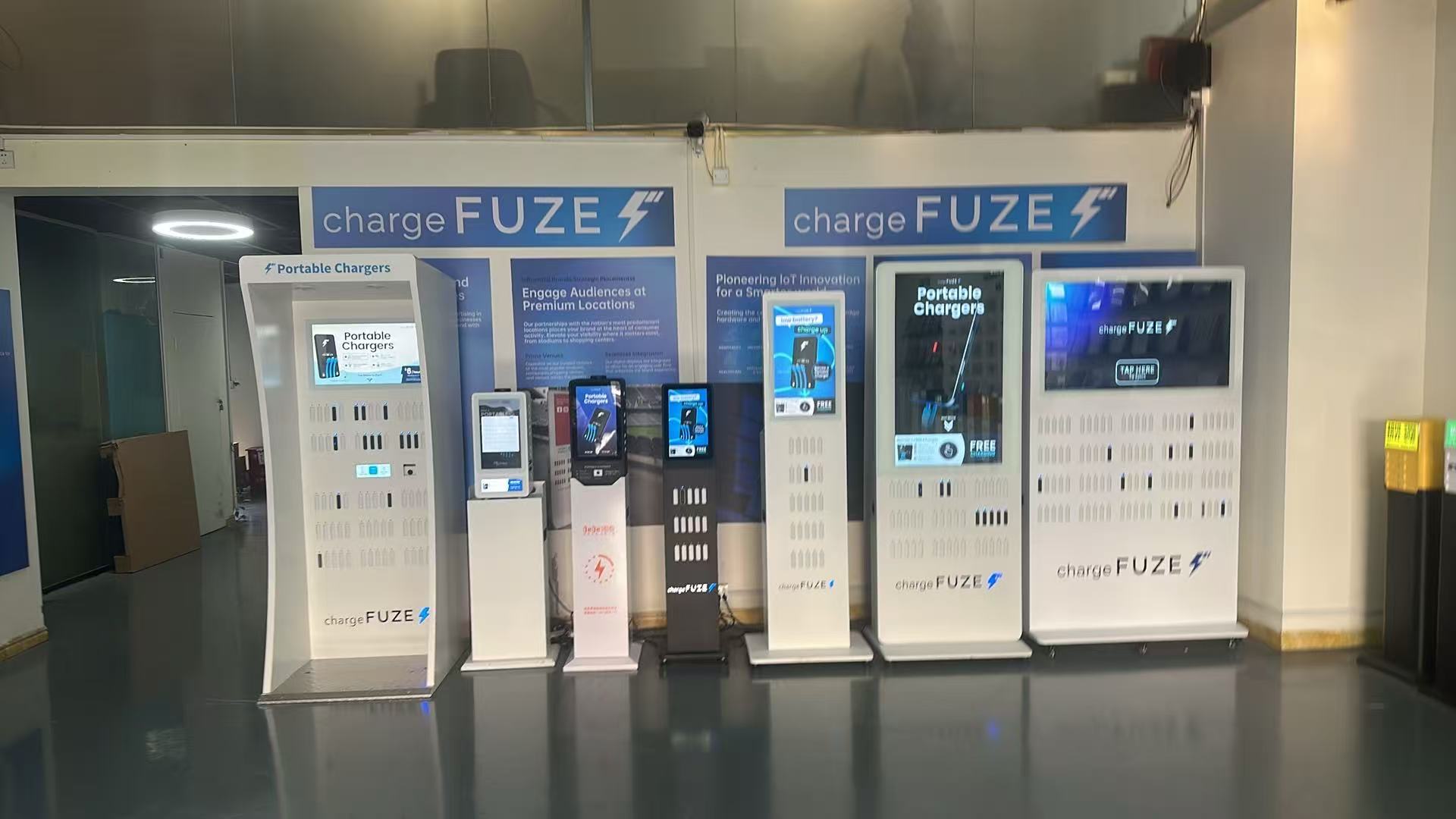
WELINK Helps Answer the Questions Behind the Business
Customers entering the shared power bank market often have many questions.
What type of charging cabinet should we use?
Which locations should we test first?
How should customers pay?
Can we use our own brand?
Can the software support our language?
Can we customize the user interface?
Can we integrate our payment provider?
How do we manage hundreds of stations?
What happens when our project grows quickly?
Can the factory support larger orders?
These are not separate questions.
They are parts of the same business.
This is why an integrated solution matters.
WELINK combines product development, software, manufacturing and customization to help partners build a complete shared charging platform.
From Manufacturing to Commercial Enablement
Traditional manufacturing ends when the product leaves the factory.
The shared economy requires a different relationship.
Operators need hardware that can work with software.
Software needs to communicate with payment systems.
Payment systems need to match local users.
Stations need to fit merchant locations.
Brands need consistent presentation.
Manufacturing needs to scale when the market grows.
This creates a complete chain:
R&D → Hardware → Software → Payment → Manufacturing → Deployment → Operation → Expansion
WELINK's role is to support partners across this chain.
Build a Revenue Platform, Not Just a Charging Network
The biggest opportunity in shared charging may not be the charging itself.
Charging is the reason customers first use the service.
But the network can create additional value through:
Rental Revenue
The customer pays for access to portable power.
Advertising Revenue
Charging cabinets and digital displays create media inventory.
Merchant Cooperation
Locations can become commercial partners.
Payment Integration
Localized payment improves the user experience.
Brand Marketing
Physical and digital touchpoints build recognition.
Operational Data
Network performance helps improve business decisions.
Scale
More stations can increase coverage, visibility and commercial possibilities.
Viewed this way, shared power banks become more than a hardware business.
They become a platform connecting consumers, merchants, brands, payment systems and physical locations.
Build Your Shared Charging Business with WELINK
The shared power bank market offers an opportunity to turn a simple consumer need into a much broader commercial model.
A customer needs power.
A merchant provides a location.
A station provides the service.
Software manages the transaction.
Payment completes the rental.
Advertising creates another revenue possibility.
Branding builds recognition.
More locations create network effects.
This is the larger opportunity behind shared charging.
For entrepreneurs, distributors, retailers, payment companies and IoT operators, success is not only about putting more machines into the market.
It is about building a system in which hardware, software, payments, advertising, merchants and branding work together.
WELINK provides an integrated foundation for this process.
With more than eight years of industry experience, more than 60 patents and software copyrights, approximately 20,000 square meters of manufacturing facilities, a professional R&D team and large-scale production capacity, WELINK supports partners from product development to commercial expansion.
Whether you are testing a new shared power bank concept, building your own local brand, integrating a payment platform or preparing to scale an existing network, WELINK can provide the hardware, software, customization and manufacturing capabilities required to support your business.
WELINK helps turn shared charging from a simple rental service into a scalable platform for revenue, advertising, payment, merchant cooperation and brand growth.


