What Makes a Complete Shared Power Bank Rental System?
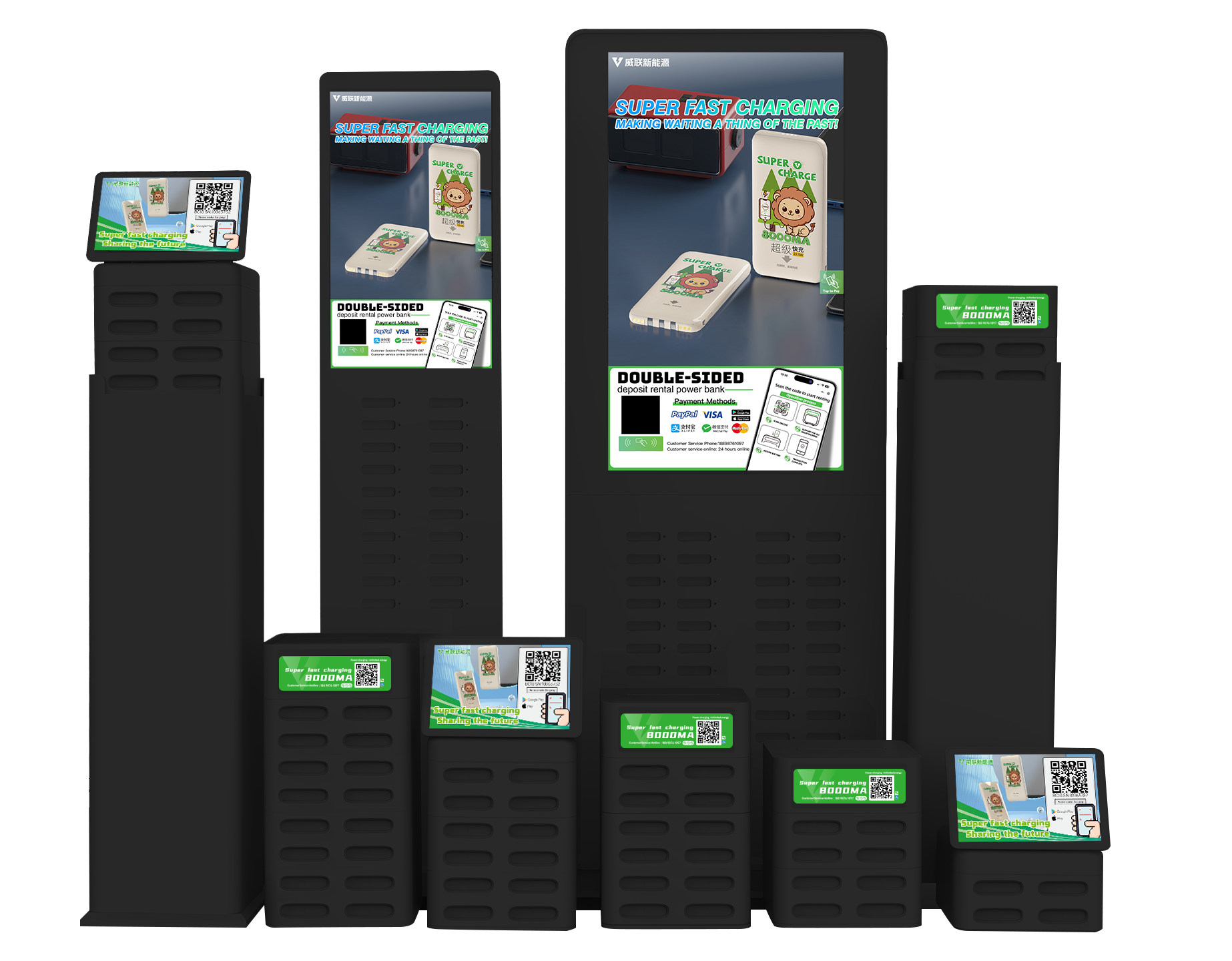
A shared power bank rental business is more than a charging station.
To operate a reliable rental network, hardware, power banks, rental software, payment, connectivity, backend management and technical support need to work together as one complete solution.
For businesses planning to launch a shared power bank service, distributors building their own network, or companies with an existing software platform, understanding these components is an important first step.
So, what makes a complete shared power bank rental system?
In general, a complete solution includes eight key components:
Hardware + Power Banks + Rental Software + Payment + Connectivity + Backend + OEM/ODM + Technical Support
1. Hardware: The Physical Foundation
The charging station is the main physical point where customers rent and return power banks.
A station normally provides three basic functions:
Store power banks
Charge power banks
Release and accept power banks
Different locations require different station configurations. A small restaurant may need a compact station, while a nightclub, shopping mall, hotel or entertainment venue may require a larger-capacity model.
When selecting a station, operators may consider:
Number of slots
With or without screen
Indoor or outdoor use
Station size
Fixed or movable installation
Advertising display
QR code rental
Network connectivity
Branding requirements
VSCHARGE provides different shared power bank station configurations and supports customized solutions for different business scenarios.
2. Power Banks: The Product Customers Rent
The station is the infrastructure, while the power bank is the product customers actually rent.
A complete solution therefore needs to consider both the station and the power bank.
Important specifications may include:
Battery capacity
Charging speed
Output interfaces
USB-C support
Lightning compatibility
Cable configuration
Battery protection
Power bank identification
The power bank also needs to work with the station's management system.
The system should be able to identify which power bank is available, which one is being rented, where it is returned and its current status.
3. Rental Software: Turning Hardware Into a Business
A charging cabinet alone cannot operate a rental business. The software system connects the hardware with the customer rental process and business operations.
A typical rental process is:
Scan QR Code → Open Rental Page → Payment/Authorization → Power Bank Release → Rental → Return → Final Charge
Depending on the project, rental software may include:
Web/H5 rental page
QR code rental
User management
Rental order management
Pricing rules
Deposit or pre-authorization
Rental time calculation
Return management
Station management
Power bank management
Revenue and transaction data
Customers without their own software platform can use a complete VSCHARGE rental software solution.
Customers that already have their own APP, website or backend can also discuss hardware and software integration according to their requirements.
4. Payment: Connecting Rental With Revenue
Payment is an essential part of any shared power bank rental system.
Depending on the target market, operators may need to support:
Bank cards
QR payments
Apple Pay
Google Pay
Local payment providers
Digital wallets
A rental system may also support deposits or pre-authorization.
For example, the system can authorize a certain amount when the rental starts. After the power bank is returned, the system calculates the actual rental fee and releases or refunds the remaining amount according to the payment configuration.
For customers using their own payment provider, the relevant API or integration documentation can be provided for technical evaluation.
5. Connectivity: Keeping Stations Online
Shared power bank stations need a stable connection with the management system.
Depending on the project, connectivity may use:
4G
Wi-Fi
Other supported network configurations
The station can communicate information such as:
Station status
Available slots
Power bank status
Rental and return events
Network status
Device information
Connectivity is particularly important when operators manage multiple stations in different locations.
With a connected system, operators can monitor their stations remotely instead of checking every device physically.
6. Backend: The Control Center
The backend is where operators manage their shared power bank network.
A management platform may include:
Station Management
Station information, location, online/offline status and available slots.
Power Bank Management
Power bank identification, battery status, rental status and return information.
Order Management
Active rentals, completed rentals, rental duration, payment and refund information.
Business Management
Pricing, merchants, revenue, transaction records and operational reports.
The backend connects the physical hardware with the business side of the rental operation.
For customers with their own backend, VSCHARGE can also discuss integration between the customer's software architecture and shared power bank hardware.
7. OEM/ODM: Building Your Own Brand
For many B2B customers, a complete solution also needs to reflect their own brand.
VSCHARGE can support customization depending on project requirements, including:
Station logo
Station colors
Station appearance
Power bank branding
Packaging
User interface
Rental page
Software branding
Advertising content
A customized or white-label solution allows operators to create a more consistent brand experience throughout the rental process.
Specific customization options, MOQ and development requirements should be confirmed according to the project.
8. Technical Support: Supporting Long-Term Operation
A shared power bank project does not end when the hardware is delivered.
During deployment and operation, businesses may need support with:
Hardware installation
Software configuration
Payment integration
API integration
Device communication
Network issues
Troubleshooting
Software updates
System expansion
Technical support becomes increasingly important as the number of stations grows.
A business may start with a small pilot project and later expand to dozens or hundreds of locations, so the solution should be able to support both the initial testing stage and future expansion.
How These Components Work Together
These eight components should not be viewed as separate products. They form one connected ecosystem.
A simplified architecture is:
Power Bank
↓
Station Hardware
↓
Connectivity
↓
Backend / Rental Platform
↓
Payment + Order Management
↓
Customer Rental Experience
For customers using their own software, the architecture can also be:
Own APP / Web → Own Backend → API / Integration → VSCHARGE Hardware → Station + Power Banks
This allows businesses to choose a solution according to their existing technology and business model.
What Makes a Complete Solution?
A complete shared power bank rental system is not simply a charging cabinet with several power banks.
It combines:
Hardware for storing, charging and releasing power banks
Power Banks for providing portable charging
Rental Software for managing the customer rental process
Payment for processing rental charges and deposits
Connectivity for connecting stations with the system
Backend for managing devices, orders and business data
OEM/ODM for creating a customized brand experience
Technical Support for integration, deployment and future expansion
The exact configuration does not have to be the same for every customer.
A startup may need a complete hardware and software solution. A technology company may only need hardware with API and communication support. A distributor may require OEM/ODM branding and a scalable management platform.
The key is to make sure that all the necessary components can work together as one system.
Build Your Shared Power Bank Solution With VSCHARGE
VSCHARGE provides shared power bank solutions covering hardware, software and system integration requirements.
Depending on the project, solutions can include:
Shared Power Bank Stations + Power Banks + Rental Software + Payment Integration + Connectivity + Backend + API Integration + OEM/ODM + Technical Support
Whether you are testing a small pilot project, building your own rental platform or planning a larger shared power bank network, VSCHARGE can provide a solution based on your business model, target market and technical requirements.
A successful shared power bank business starts with more than choosing a station. It requires a complete system in which hardware, software, payment, connectivity and business management work together.
VSCHARGE — Shared Power Bank Hardware + Software + Payment + Connectivity + OEM/ODM Solutions.


