Buying Power Bank Stations: Factory vs Distributor
When starting a shared power bank rental business, choosing the right supplier is an important step. Should you buy power bank stations directly from a factory or purchase them through a distributor?
Both options have advantages. Distributors may offer local inventory, convenient communication, and regional support. Factories can provide more direct access to manufacturing capabilities, customization options, and technical teams.
However, the right choice depends on more than the initial purchase price. Minimum order quantity (MOQ), software compatibility, payment integration, delivery time, and after-sales support can all affect your investment.
In this guide, we compare factory-direct purchasing with distributor sourcing to help you make an informed decision.
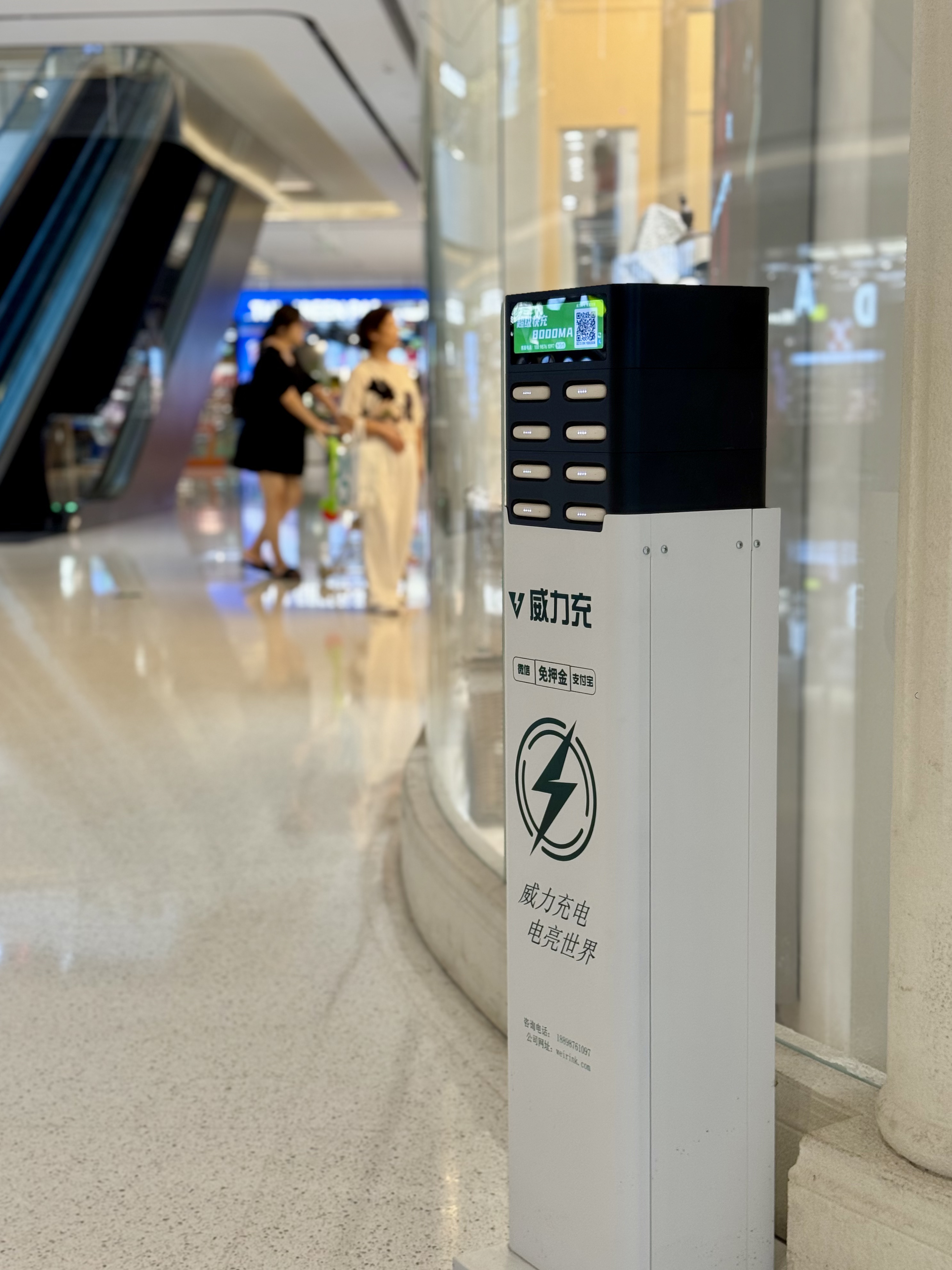
1. Buying Power Bank Stations Directly From a Factory
A factory-direct supplier manufactures or assembles power bank rental stations and may also provide software and integration services.
Working directly with a manufacturer allows you to discuss your requirements with the team responsible for production and product development.
More Competitive Pricing
Buying directly from a factory can reduce additional distribution markups, particularly when ordering multiple stations.
However, factory-direct purchasing does not always guarantee the lowest total cost. Customization, software, packaging, shipping, and import duties may be charged separately.
Always compare complete quotations rather than focusing only on the unit price.
Greater Customization Flexibility
If you want to build your own shared power bank brand, customization may be an important consideration.
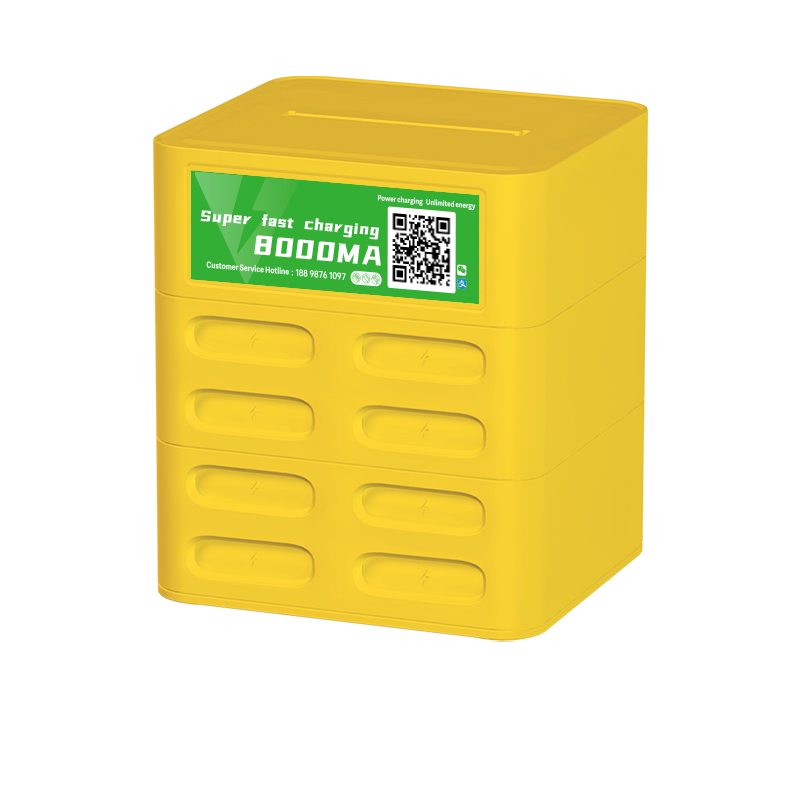
Depending on the manufacturer's capabilities, options may include station logos, exterior colors, slot capacity, screen configurations, branded power banks, packaging, and customer-facing software.
For example, a startup may begin with an 8-slot station to test demand, while a growing operator may need 12-slot or larger-capacity stations for shopping malls, hotels, restaurants, and entertainment venues.
Discussing these requirements directly with the manufacturer helps you understand available options, development costs, and customization minimums.
More Direct Technical Communication
A shared power bank rental system involves more than hardware. The station, power banks, rental software, payment processing, and backend management must work together.
A manufacturer with relevant technical capabilities may help you evaluate API integration, device control, power bank identification, return detection, and software compatibility.
This is particularly valuable if you already have your own application or backend system.
Potential Challenges
International buyers may need to coordinate production schedules, shipping arrangements, import requirements, and technical specifications.
Some customizations also require higher order quantities. Before purchasing, confirm whether the supplier supports samples, what the standard MOQ is, and whether customized products have different minimum requirements.
2. Buying Power Bank Stations Through a Distributor
A distributor purchases products from manufacturers and resells them to customers, often within a specific region or market.
Depending on its services, a distributor may provide local inventory, installation assistance, logistics coordination, and first-line technical support.
Convenient Local Support
A local distributor may understand regional business practices, installation requirements, and customer expectations. This can simplify communication and coordination, especially when on-site assistance is needed.
Potentially Faster Delivery
Distributors with available inventory may deliver standard products faster than suppliers that need to arrange a new production run.
This can be useful when you need replacement equipment or want to launch a pilot quickly.
However, delivery speed depends on actual stock availability, product configuration, and shipping arrangements.
Simplified Procurement
Some distributors offer bundled services, including equipment sourcing, transportation, installation, and after-sales coordination.
For buyers without an experienced procurement team, this can reduce the workload involved in managing multiple suppliers.
Potential Limitations
Distributor pricing may include an additional resale margin. Customization options can also depend on the distributor's relationship with the original manufacturer.
Technical questions may need to pass through several parties before reaching the development team, potentially complicating software integration or hardware modifications.
Before placing an order, clarify who handles warranty claims, spare parts, software updates, and technical troubleshooting.
3. Factory vs Distributor: What Should You Compare?
When comparing suppliers, focus on the requirements of your project rather than assuming one purchasing channel is always better.
Pricing:Compare the complete investment, including hardware, customization, software, shipping, and applicable import costs.
MOQ:If you are testing a new market, look for a supplier that can support a small pilot order.
Customization:Check whether the supplier can provide branded stations, power banks, packaging, and software interfaces.
Software integration:Determine whether you need a complete rental management system or hardware that connects to your existing platform.
Delivery and support:Confirm production schedules, stock availability, warranty coverage, replacement procedures, and technical support arrangements.
A capable distributor may offer excellent technical services, while some factories focus mainly on manufacturing. The supplier's actual capabilities matter more than its business label.
4. Which Option Is Right for Your Business?
If You Are Testing the Market
For a new shared power bank rental business, a small pilot can help you evaluate demand, rental workflows, payment processing, and location partnerships before making a larger investment.
A distributor may be suitable if immediate delivery is your priority. A factory may be preferable if you want to test the manufacturer's software and discuss future customization.
Recommendation:Prioritize a reliable pilot system, manageable costs, and clear technical support.
If You Want to Build Your Own Brand
Businesses establishing their own rental networks may need customized stations, branded power banks, packaging, and a white-label rental interface.
Working directly with a manufacturer can make it easier to coordinate these requirements and plan for future expansion.
Recommendation:Look for a factory with proven OEM/ODM capabilities and transparent customization costs.
If You Already Have Your Own Software
If you have your own application, payment infrastructure, or backend platform, you may only need compatible hardware.
Ask whether the supplier supports API integration or a documented communication protocol. Confirm how the system handles power bank release, device status, return detection, and power bank identification.
Recommendation:Choose a supplier that can clearly explain its integration capabilities and technical responsibilities.
If You Need Equipment Quickly
When installation locations are confirmed and deadlines are tight, a distributor with the correct models in stock may be a practical choice.
A factory can also be suitable if the required configuration is available for immediate dispatch.
Recommendation:Compare confirmed stock, dispatch dates, shipping time, and product specifications before deciding.
5. How to Evaluate a Power Bank Station Supplier
Regardless of the purchasing channel, check the following before placing an order.
Product specifications:Confirm slot capacity, screen options, power bank capacity, charging interfaces, and connectivity.
Software and payments:Verify the rental workflow, payment gateway compatibility, and support for local payment methods in your target market.
Quality and compliance:Request relevant product specifications and applicable certification or transport documentation for your destination country.
Warranty and after-sales service:Clarify warranty coverage, replacement procedures, spare parts availability, and software maintenance.
Total cost of ownership:Include hardware, customization, software, shipping, import duties, installation, connectivity, and ongoing service costs where applicable.
A low initial quotation may not represent the best value if essential services are excluded.
6. Why Consider VSCHARGE?
VSCHARGEprovides shared power bank rental station solutions for businesses developing branded rental networks.
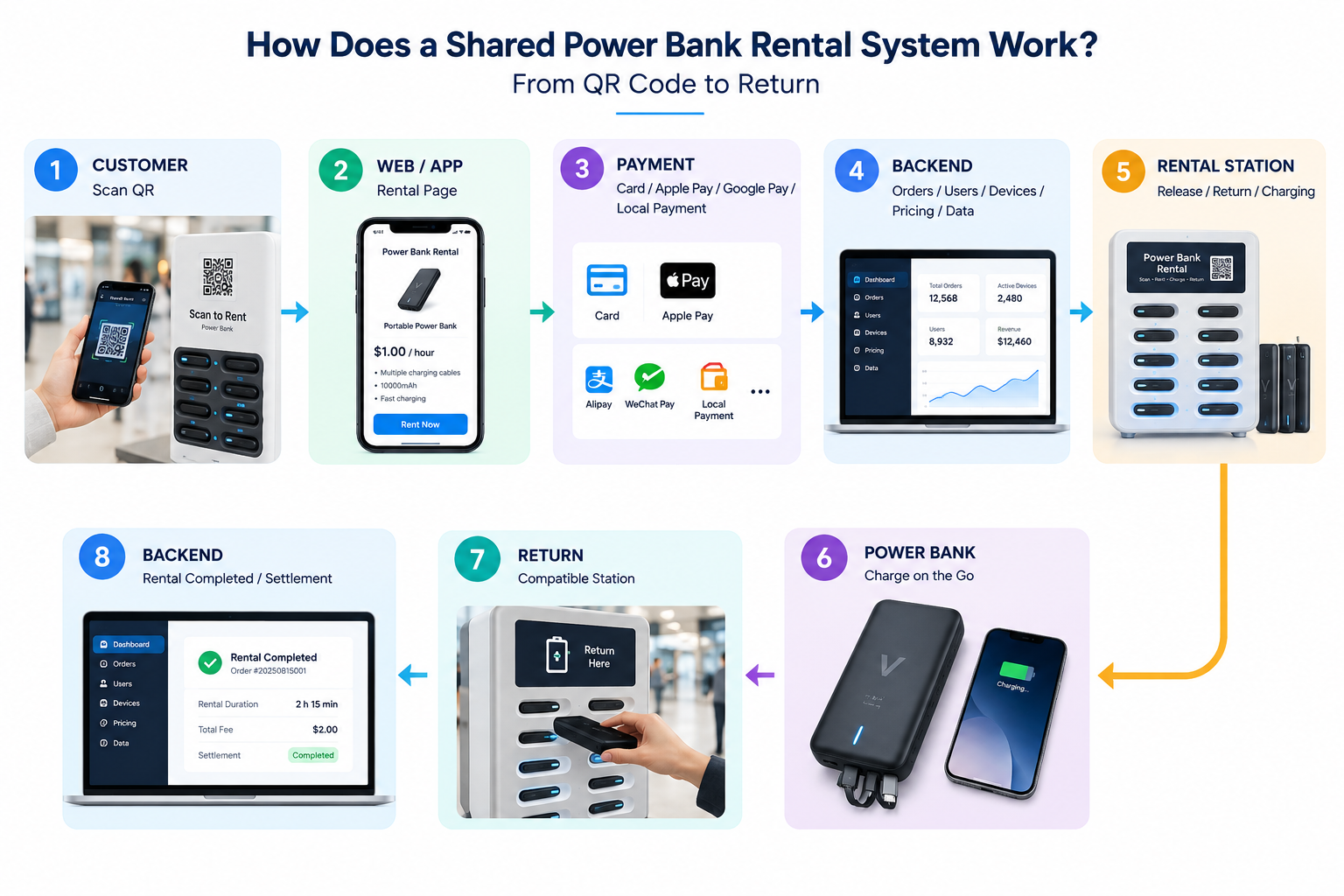
Depending on project requirements, available solutions can include station hardware, compatible power banks, OEM/ODM customization, rental software, backend management, and API integration.
Different station configurations can support various deployment scenarios, from compact countertop installations to higher-capacity stations for busy commercial venues.
For new operators, starting with a small pilot can help validate the business model before expanding. For established businesses, discussing hardware and software integration can help determine whether a complete white-label solution or compatibility with an existing platform is more appropriate.
The right configuration depends on your target market, budget, business model, and technical requirements.
Conclusion
Buying power bank stations directly from a factory and purchasing through a distributor can both be effective sourcing strategies.
Factory-direct purchasing is worth considering when customization, technical communication, and long-term supply planning are priorities. Distributors may be more suitable when local inventory, regional support, and procurement convenience matter most.
Before making a decision, compare the complete quotation, verify the supplier's capabilities, and ensure the proposed solution meets your operational requirements.
Looking for a power bank station supplier for your project?
Contact VSCHARGE to discuss your target market, station capacity, branding requirements, software needs, and initial order quantity. Our team can help you identify a suitable solution for your pilot project or growing rental network.


